Skip to content
Jason A. Heppler

Microblog

Microblog

Journals in the Digital Age

“We should not be committed to the existence of institutions, but to the ends those institutions were created to enable.” -Abby Rumsey

What value do journals and books add versus digital scholarship? We invest value into these forms of scholarly presentation as though they carry value of their own. As Tom Scheinfeldt tweeted relatively recently, the book and the article are like gold and silver. They carry no intrinsic value; print text is a form we grip to out of tradition and invest our own value into.

How might we define scholarly communication?

  1. idea(s) and formulation
  2. analysis and narrative
  3. dissemination
  4. reuse and citation

What forms can and do scholarly communication take?

  1. narrative (traditionally)
  2. analysis (traditionally)
  3. data visualization (spatial, text, and so on)
  4. data (and databases)
  5. markup as interpretation (as Jerome McGann has argued elsewhere)

The web offers new forms of communication and dissemination, sometimes (often?) superior to the printed word, but we have yet to fully grasp it. Look at William and Mary Quarterly for example. They have a section on their site that contains additions for digital work (they call “Web Supplement”) that accompanies the print. Contrast this with the born-digital article by Edward Ayers and William Thomas The Difference Slavery Made based off the Valley of the Shadow digital history project. These two examples illustrate where we’ve gone in the last ten years with digital scholarship — away from long form narrative on the web, and a turn to digital work to accompany traditional print. Some journals are pioneering new forms, like the digital-only Southern Spaces, but historians need to be aggressive in getting more journals in their fields to start thinking hard about how to handle digital scholarly production.

I’m not saying I’m in agreement with Jeff Gomez who argues that print is dead (although keep in mind some of the major shifts in publishing that occurred just last year that suggest digital publication is becoming more and more a norm). But I do think there is room for digital to be the only version of a text, narrative, or analysis.

Academia

The Paleo Diet

Over the past few months I took up the Paleo diet. Since then, a lot of people have asked me about it. Paleo isn’t so much a diet as a lifestyle change that eliminates glutens, refined sugars, among other things. Paleo isn’t all that new, popularized in the 1970s but stretches back further, and differs in some ways from other low carb and slow carb diets.

Paleo is short for “paleolithic” and refers to the Paleolithic Era of human existence, a period stretching roughly from Homo sapiens to the invention of agriculture. The science behind Paleo argues that our bodies have not evolved to process the diets that dominate our lives today, including grains (wheat, rice, barley), legumes (beans, peanuts), and dairy. Our foods have changed a lot over the last 10-15,000 years – but genetically, we’re not much different from the human species that lived 100,000 years ago. We haven’t had the time to adapt.

I haven’t been perfect in following it and really fell off the wagon over the holidays, but I’ve nearly gotten back on track. I immediately noticed changes when I started the lifestyle – more energy, felt like I was thinking more clearly, sleeping better. Best of all, I lost a stunning amount of weight simply by changing the way I ate. Many people who start the lifestyle note similar effects, including numerous other health benefits.

So, here’s a few of the sources I read when I got started down the path.

Books

General

Blogs

Personal

Standing Against SOPA

If you visited in the last twenty-four hours, you would’ve seen that the site was, like many others, silenced to protest SOPA.

Protesting SOPA

Not everyone agreed with the blackout strategy. Merlin Mann, someone I respect a lot for a variety of reasons and whose opinions I value, tweeted that he didn’t see the point.

Merlin Mann.

I think I understand Merlin’s position – that, as a content creator on the web, it is silly to censor yourself to protest censorship. It’s a fair criticism, but my own motivation was to make a point and raise awareness. Did I accomplish that? Maybe. I get nowhere near the sort of traffic that Merlin probably sees, but I know that in some of my circles – online and off – people noticed it. I reached a few people by my action, and for me, that’s all I hoped to achieve. The stance taken by Reddit, Wikipedia, and others made an impact and stirred discussions.

The fight isn’t over. We can all easily call today a victory, but will the energy carry over to next week? Next month? The next battle we have over this issue? Even if SOPA and PIPA are dropped from congressional consideration, the content companies who prefer zero copying will continue to fight for restrictions and line the pockets of congressional representatives. SOPA and PIPA are part of a history that’s been going on for twenty years, beginning with media concerns over copying television or movies with VCRs or music with personal tape recorders. The Audio Home Recording Act of 1992 established precedents for infringement, primarily declaring that copying and remixing was fine unless someone was making perfect copies and reselling them. But media companies were not content with the ruling. We need to be ready for the next salvo.

The strategy worked today, but it won’t be effective in the long run. Blocking our content or plastering “STOP SOPA” on our Twitter avatars may make us feel like we’re having an impact, but this only works for so long and in certain instances. We need to move on to more effective long-term strategies, and in that spirit I’d like to direct you to the Electronic Frontier Foundation (EFF). The EFF, a donor-supported nonprofit (full disclosure: I’m a member), is one of our most effective lobbyists in the campaign against SOPA/PIPA and similar legislation. Please, go donate or become a member.

Indie web

Digital History at the AHA

I’m excited to be attending the American Historical Association meeting in Chicago, not only because it is my first AHA but also because of the great number of sessions on Digital History. Kaci Nash, Leslie Working, and myself will be blogging at The Digital History Project blog summarizing as many of the sessions as we can at the end of each day. We will also be live tweeting from as many as we can. You can follow tweets about the AHA with #AHA2012.

THATcamp AHA is meeting today as well, which I’ll be participating in. I’m also in the AHA program and will be participating in a round table on Sunday morning. I look forward to meeting a lot of new people, connecting with some long-time Twitter followers, and overall having a great time in Chicago.

Academia

THATCamp Proposal: Programming in the Humanities

Over the course of my training as a digital historian, I have had two opportunities where classroom instruction involved learning a programming language. The first was in Prof. Stephen Ramsay’s Electronic Text course during the fall of 2010 where I formally learned Ruby. The other was this past fall in a digital humanities seminar with Prof. William Thomas where I self-taught myself Objective-C in a month to build an iOS application.

I am, most broadly, interested in this idea of programming in the humanities as separate from Software Studies (Lev Manovich et al.), Critical Code Studies (Mark Marino et al.), and Platform Studies (Ian Bogost et al.) (hat tip to Steve Ramsay for pointing out this distinction to me recently). The digital humanities perspective on code is different, and perhaps this is an area for discussion.

I propose a general discussion about the nature and training of humanities programming:

  • How do we help prepare graduate students and faculty in the basics of programming?
  • Or, should they be concerned with programming at all (Steve says yes)? Is it just nice to have, or essential? Is programming best left to the professionals?
  • What are the benefits and pitfalls of taking the time to learn a programming language (or several)? How do you decide which language is best?
  • How might programming knowledge shape careers?
  • What mentoring services or formal instruction can be introduced to graduate training in humanities programming?
  • How does building shape the way we think, research, teach (see Kathi Berens, e.g.)?
  • How failure produces results.

Digital history

A Literary History of Word Processing

Great piece in the New York Times featuring the inimitable Matthew Kirschenbaum and the book he’s working on:

The literary history of the typewriter has its well-established milestones, from Mark Twain producing the first typewritten manuscript with “Life on the Mississippi” to Truman Capote famously dismissing Jack Kerouac’s “On the Road,” pounded out on a 120-foot scroll, with the quip “That’s not writing, that’s typing.”

The literary history of word processing is far murkier, but that isn’t stopping Matthew G. Kirschenbaum, an associate professor of English at the University of Maryland, from trying to recover it, one casual deletion and trashed document at a time.

Writing

Peer Reviewing Writing History in the Digital Age

I am fascinated by the process of open peer review for Writing History in the Digital Age. Although there are sections of the volume that lack substantial comments (there were only a few on the essay I read, and glancing around at the others showed similar patterns), the publicness of sharing these works online can promote scholarly discussion across a variety of disciplines. I will likely spend some more time thinking about the piece and, instead of making an overall assessment of the piece as a whole, ask questions within paragraphs that will help prompt discussion. It seems that this would be more useful than the general overview I wrote. Also important is the transparent process of open peer review. Instead of some mysterious black box of activity, open review prompts more discussion of the work by a wider range of scholars than the few selected by an editor under the traditional modes of publishing. It is a unique tandem: the openness of the work itself, but also the transparency of comments and ideas that may encourage further thought not just among the writers but among other viewers and reviewers as well.

I will also note, in my experience with this, that I felt what I could describe as a social or cultural pressure to do something substantial and useful. I know of Fred Gibbs and Trevor Owens, I’m interested in the work they do, and we’ve had digital conversations. My name is now publicly attached to their work, out there not only for them to read but available to anyone else who might be interested in knowing my thoughts. Call it ego, call it reputation, call it a line on the CV, but I’ve inserted myself into the broader process of writing and creating this volume of essays. I see this as a good thing. It shows a commitment to publicness in scholarship and (appropriately enough for Gibbs and Owens piece) a transparency in our methods. I want to feel that pressure of offering something useful because I want to help my colleagues succeed. I do not know if I succeeded in offering something helpful, but I suspect this will not be the only time I spend thinking about their piece.

If you have not read it, Kathleen Fitzpatrick’s piece on open peer review is a must.

Digital history

The Information: A History, a Theory, a Flood by James Gleick

I just finished reading James Gleick’s The Information: A History, a Theory, a Flood, and can report that it is an excellent read and great introduction to the history of information and the ways humans have organized, thought about, and tried to manage information. Gleick covers a wide array of material, beginning with writing and the alphabet (what he called the “founding technology of information,” p. 24) and taking readers through Charles Babbage, physics, mathematics, the Internet, and concludes with thoughts on the meaning of information and the conclusion that “forgetting takes work” (p. 362). An excellent book given my research interests, but a good read for anybody who does the history and philosophy of computing, digital humanities, or the history of technology.

He concludes thinking about meaning. Information theory, he says, ignores the meaning of information – information means nothing unless it means something to someone. For Gleick that does not come in the form of Google’s tools or hypertext or abundance of data. Rather, meaning comes from human choice “selecting the genuine takes work.”

I have some more thoughts on this that I’m writing up for my digital humanities seminar, and will post that here once it is finished. Namely, I am thinking about the interplay between information and knowledge, what digital humanities offers us in the way of moving information towards knowledge, and the limits we currently face in that endeavor.

Digital history

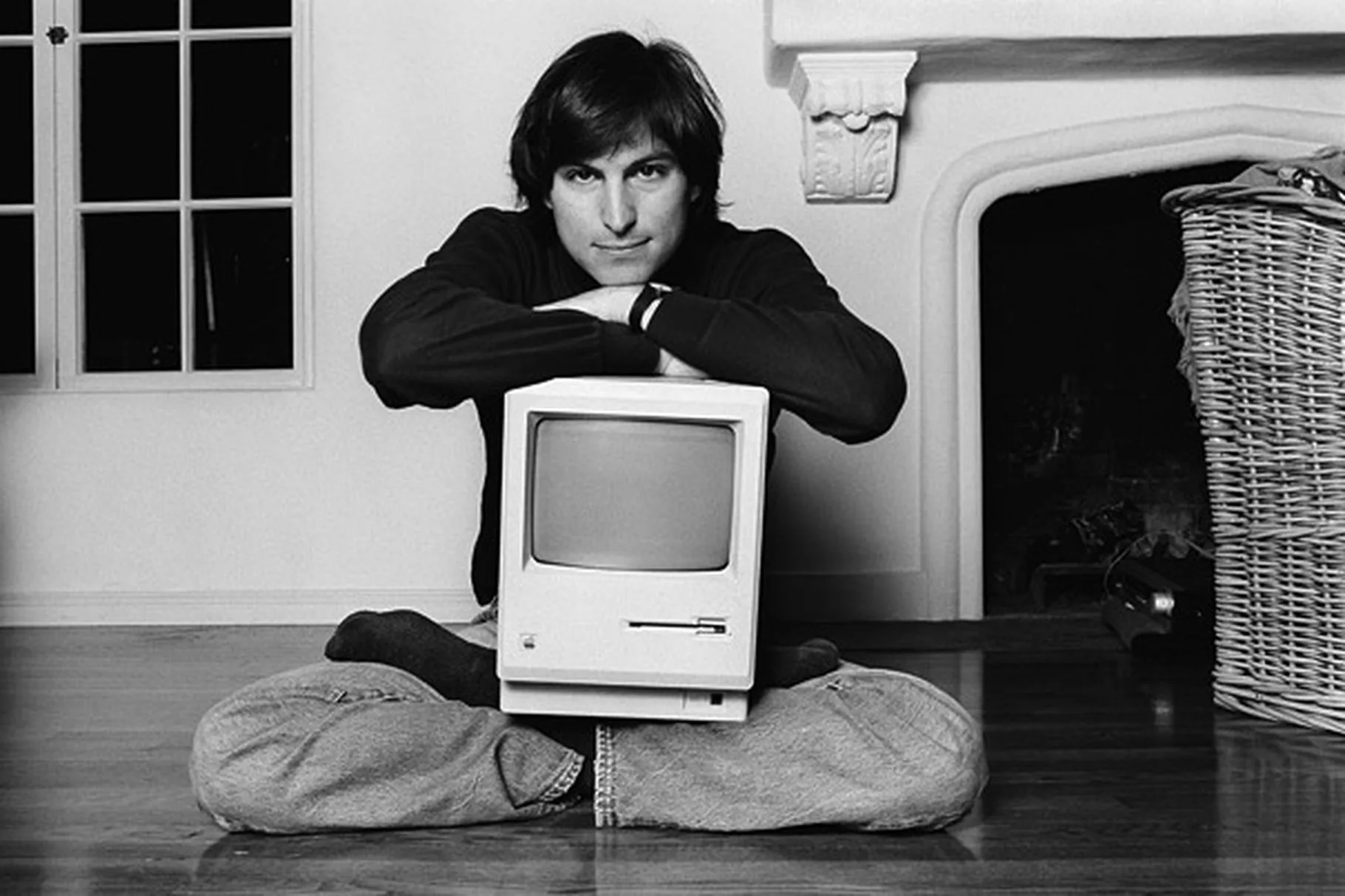
Thanks, Steve

Steve Jobs.

“Your time is limited, so don’t waste it living someone else’s life. Don’t be trapped by dogma, which is living with the results of other people’s thinking. Don’t let the noise of others’ opinions drown out your own inner voice, heart and intuition. They somehow already know what you truly want to become. Everything else is secondary.”

Steve Jobs

Tech life

Newsletter

Occasional writing on the American West, agricultural history, and political culture.