My Next Book's Publication Date
I am excited to announce that my second book has a publication date of April 23, 2024. The University of Okalhoma Press did a beautiful job with it and everyone was such a pleasure to work with. You can pre-order it now.
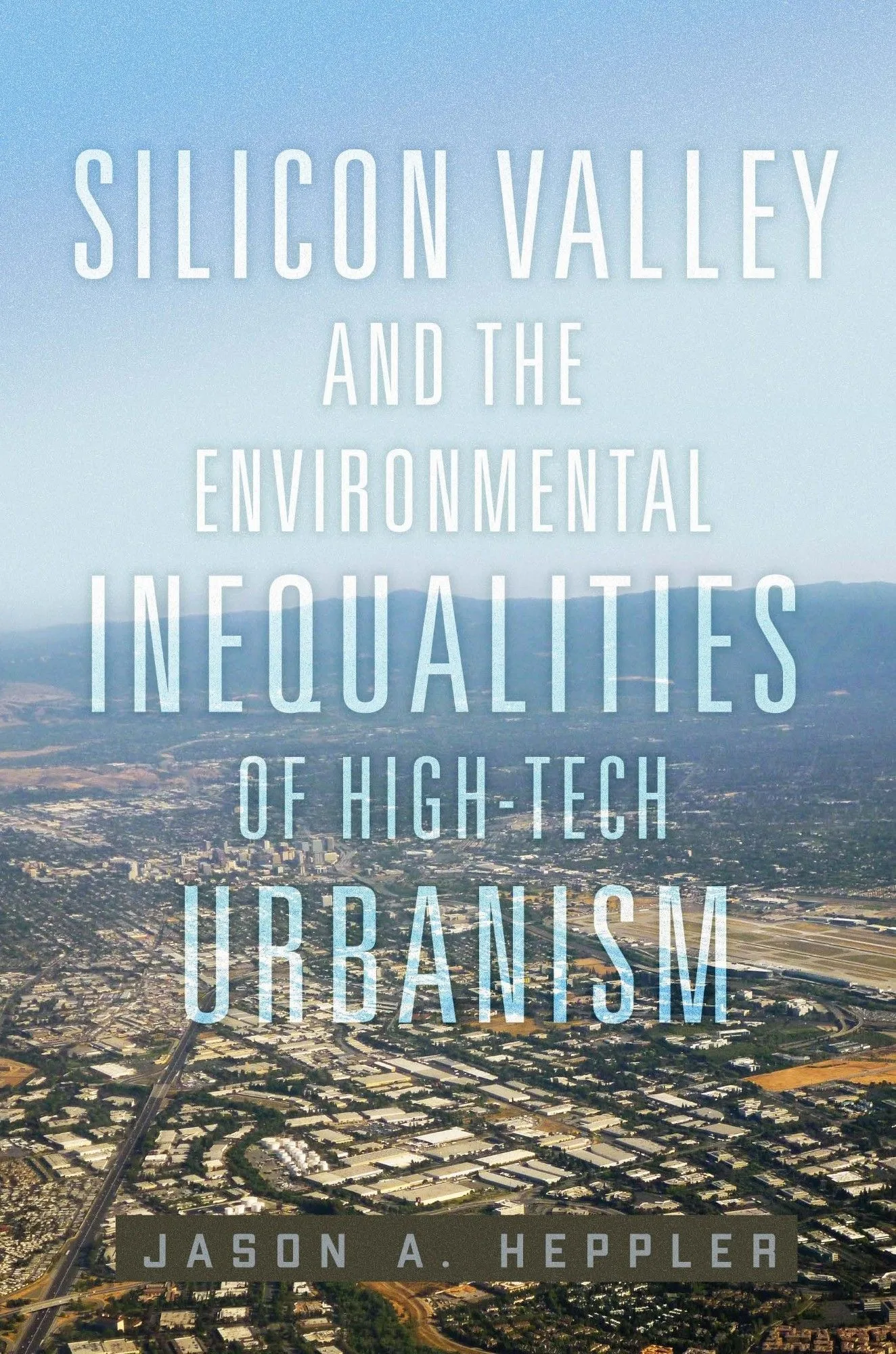
The book cover for Silicon Valley and the Environmental Inequalities of High-Tech Urbanism.
Since World War II, the emergence of high-tech industrialization in the Santa Clara Valley—what we commonly refer to as Silicon Valley, a nickname it picks up in 1971—radically transformed the landscape. This transformation represented a vision for the future of the valley and the American West, one tied to industrialization different from the steel age industries of the Midwest and East and seemingly distinct from the extractive industries of the West. Wrapped up in this transformation was the role of nature in the social,cultural, and economic conception of place, an impulse that shaped the origins of American environmentalism and urban sustainability.
The book tries to do several things. Throughout the latter half of the twentieth century, business and community leaders pursued a vision of the landscape melding bucolic naturalism of orchards, pleasant weather, and green spaces with the metropolitan promise of modern industry, defense-related research, and high-tech manufacturing. One phase of this work tries to describe how successful this attempt was. But more than that, it also describes how ideas of what a modern metropolis looked like competed with one another. Agriculture is displaced by manufacturing, jump-starting a process to protect and preserve green belts. Attempts to create an idyllic, high-tech community introduced environmental degradation and social inequalities. Rather than creating a new kind of urbanism, organizing cities around high-tech research, development, and manufacturing strengthened the power of elites, worsened human health, drove housing prices skyward, and spread pollution.
A core question I ask is: how do “nature” and “place” get defined, and who gets to define them? When certain ideas of place and nature prevail, what impact does that have? This is significant: when we talk about “the environment,” who and what is included and excluded tells us much about the social, cultural, and political underpinnings of environmentalism, a process we see play out not just among what we might consider traditional avenues of conservation and environmentalism, but through the climate emergency, urban development, and environmental justice. Silicon Valley, then, is similar to other postwar urban centers in the American West; it’s not just a story of high-tech, but a story of segregation, inequality, property, and environmental change.